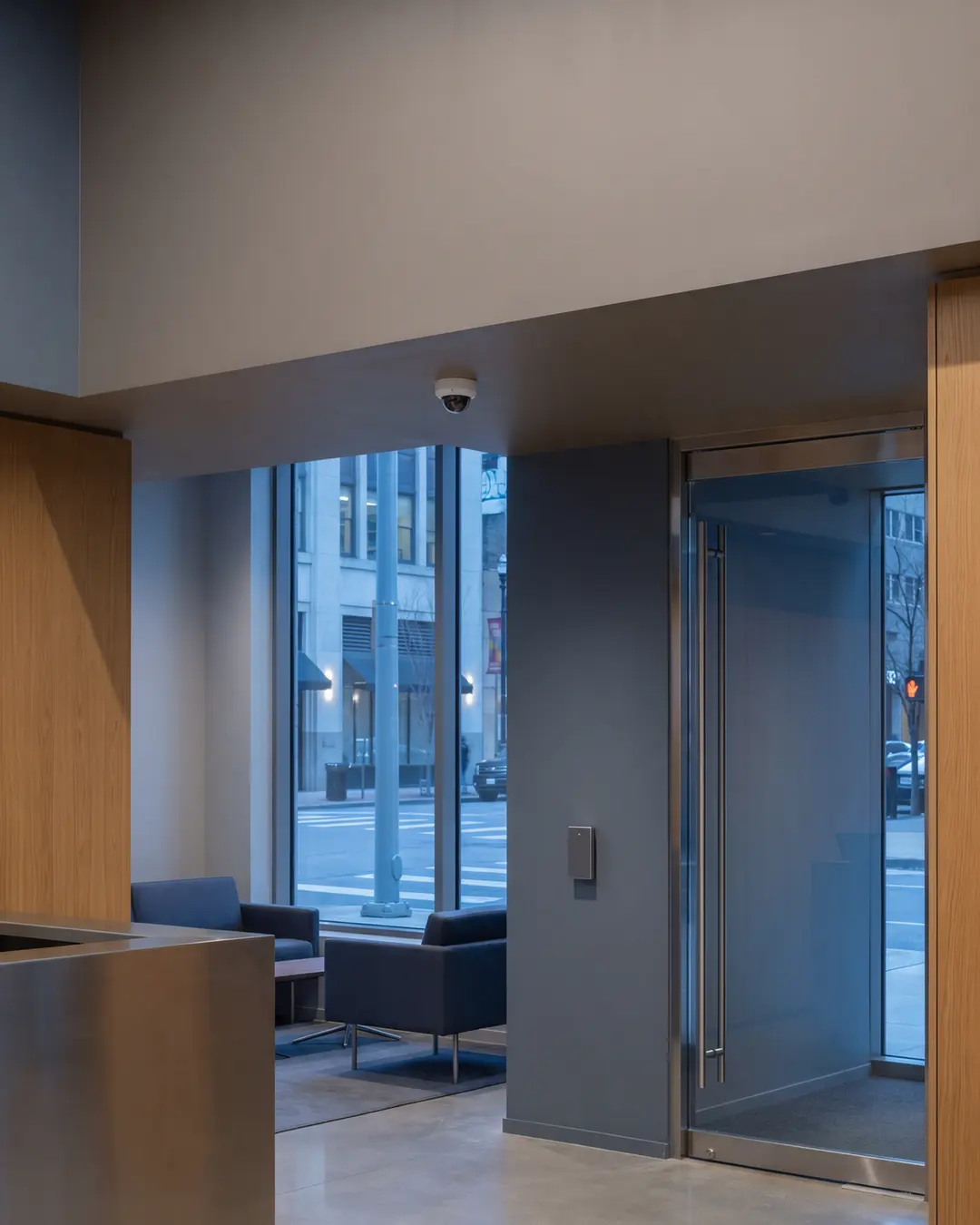
The real burden of a CCTV installation is not producing the image but deciding what becomes of it. Each camera on site hands its stream to the network switch, the stream is written to the recording server, sits on disk for the retention period, and is recalled days after an incident. H.265 compression lowers the disk requirement; but since bit rate follows the movement in the scene, storage is sized against the busiest moment of the day rather than the average frame.
Video analytics filters that stream in order to protect the operator's attention. Line crossing, zone intrusion, abandoned object and LPR rules turn raw footage into events, so what reaches the screen is no longer an image but an alert with a reason behind it. How many frames a monitoring desk can hold at once is set by human attention span, not by the number of screens. Analytics exists to choose the frame worth looking at, not to multiply cameras.
Recording, retention and evidential value
On the recording side, the measure of a design is how many days later an incident can still be retrieved. Longer retention means larger disk cost, so resolution, frame rate and retention are chosen together and raising one shortens another. A redundant disk arrangement keeps footage from vanishing when a recording server loses a disk, and at critical points the stream is written to two separate places at once.
Evidential value depends on device clocks being fed from a common source. Footage from two recording servers whose clocks have drifted places one incident at two different moments, and both lose credibility. A shared time axis also lets a read at a card reader be matched with the image from that same second, which is the link a monitoring desk builds most often.
- ANALYSIS & DISCOVERY
- SYSTEM ARCHITECTURE
- ENGINEERING DESIGN
- IMPLEMENTATION & INTEGRATION
- TESTING & COMMISSIONING
- SUPPORT & CONTINUITY