PROJECT
Casino Security and Operations Infrastructure
This is not a live customer reference — it is an illustrative example scenario.
CASINO & GAMING
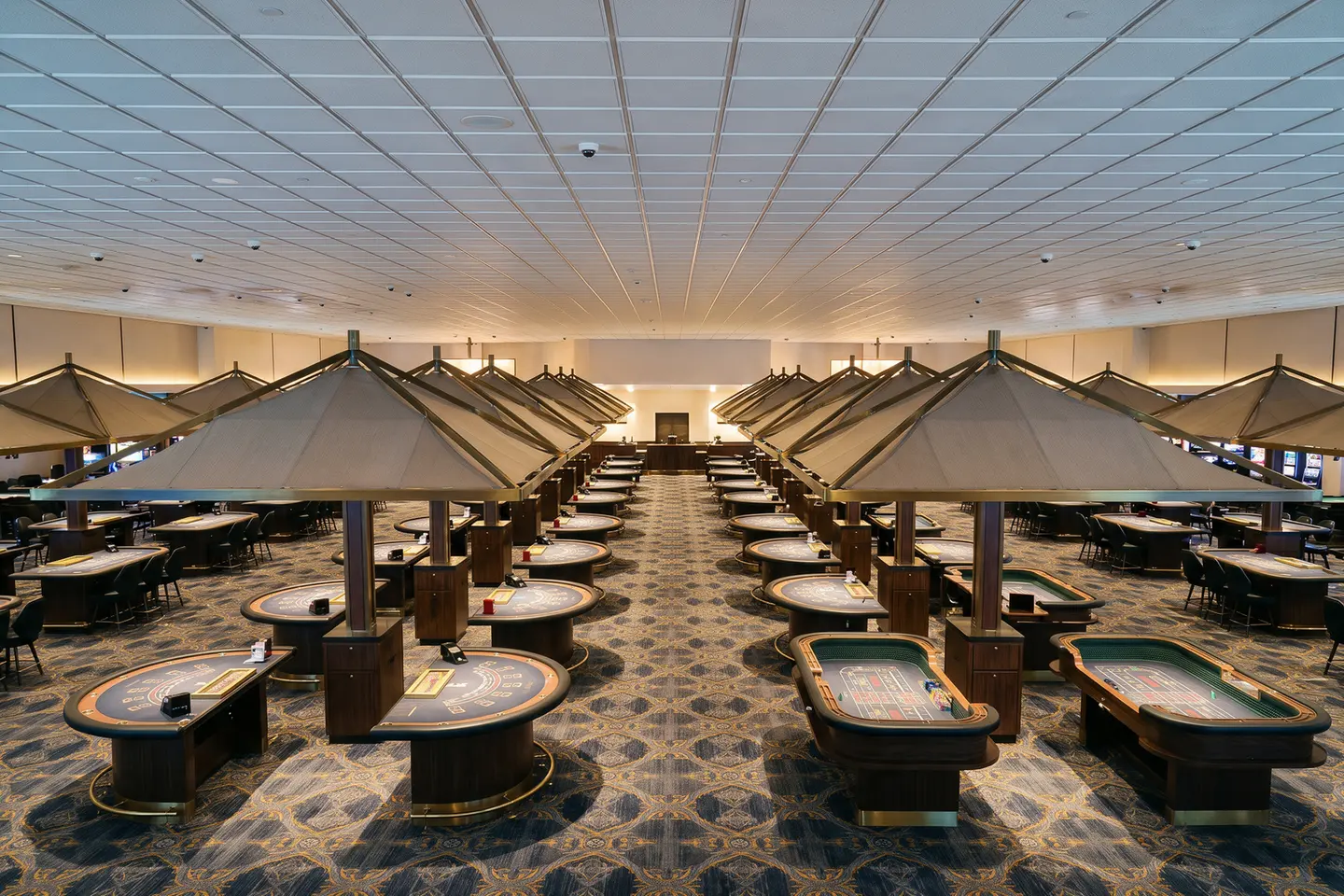
In a gaming facility the design starts from the way the building divides itself, not from a device schedule. Gaming floor, cash and count line, staff corridors and technical rooms each sit under a different access regime. That division settles almost every later decision, from cable routing to the authorisation table. A floor that never closes adds a second constraint: maintenance without a shutdown window.
Over the tables and along the cash line the CCTV framing stays fixed. A frame an operator can pan produces a record that can be argued about afterwards, so the moving units serve the general view and follow a subject, never an individual transaction point. Retention length is settled just as early, because it sets storage size.
Video analytics does not replace the operator; it decides where attention goes. Crowd density, an unexpected stoppage or a door left open that is meant to stay shut are what get pushed forward. Loose thresholds grow a pile of alerts nobody reads, so which events reach a person and which only land in the log is settled at the design stage.
The monitoring room
The wall display and the operator station do two different jobs. Wall space carries the shared picture everyone on shift sees at once: floor plan, open events, critical lines. Detail stays at the station, because promoting every alert to the wall makes that shared picture unreadable.
Handover belongs to the same design. When events an outgoing operator has not closed fail to reappear untouched on the incoming screen, the floor's history breaks at every change of shift.
Network and authorisation
Recording traffic does not share a path with the guest Wi-Fi. Separated VLANs define more than bandwidth; they define who can reach CCTV images and access control records. Redundant supply on the switches and a second path allow a card to be swapped while the floor is open.
The authorisation table rests on roles rather than doors. Holding the two-person rule of the cash line in the rule and not in the card means that when staff change, only the role itself needs redefining. Sequence works the same way: one door that will not open before another is passed is a property of the arrangement, not of the card.